Screen-Free Parenting in India: 7 Practical Ways to Foster Deep Focus and Curiosity

InventoJoy Education Team
Screen-Free Parenting in India: 7 Practical Ways to Foster Deep Focus and Curiosity
Ask any urban Indian parent what their top daily struggle is, and "excessive screen time" almost always tops the list. Between smart TVs, online classes, social media reels, and mobile games, children are immersed in continuous dopamine loops designed for passive consumption.
Yet simply confiscating devices often leads to tantrums and boredom. The secret is not subtraction—it is substitution with richer, more captivating tactile alternatives.
7 Practical Rules for a Screen-Balanced Indian Home
1. Establish the 'Maker Table'
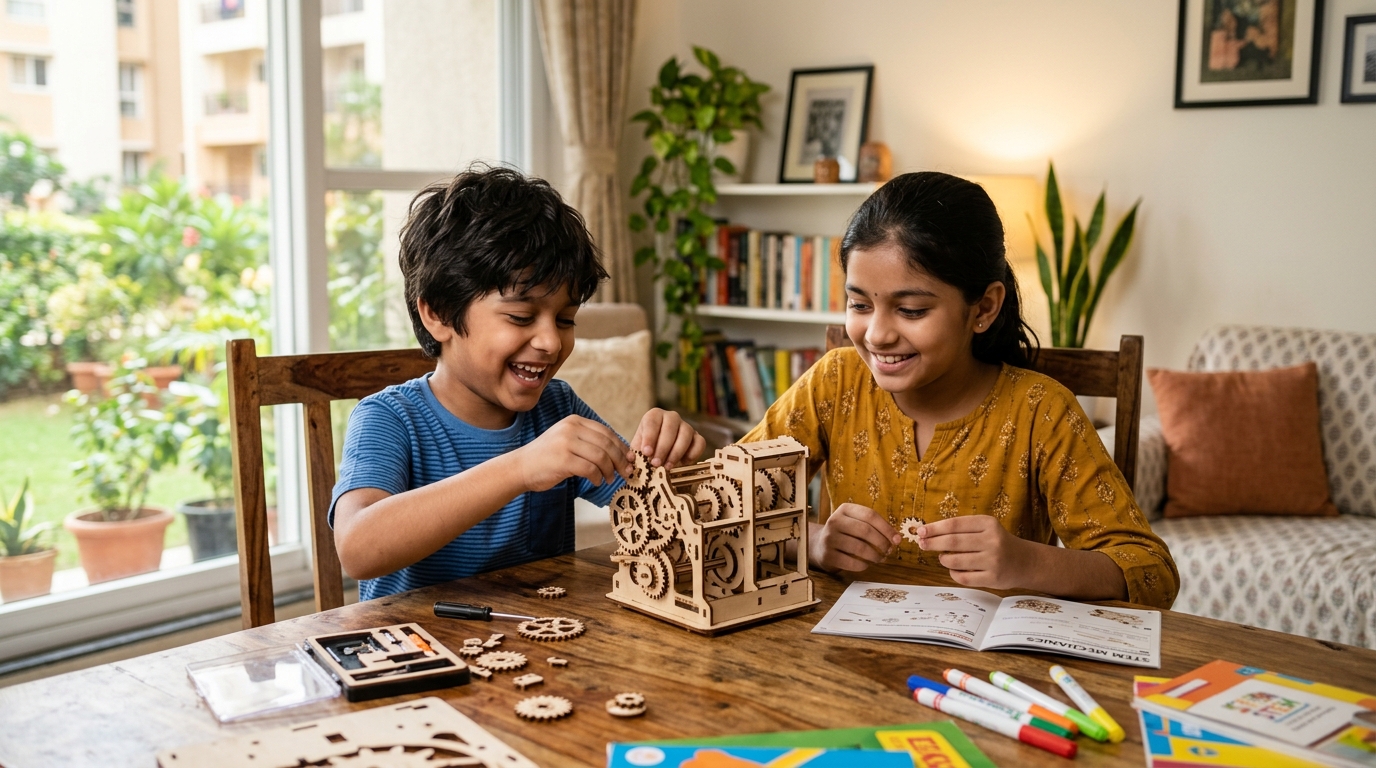
Dedicate a specific, well-lit surface in the living room or study corner where unfinished building kits, wooden gears, sketchbooks, and measuring tapes can remain undisturbed. When materials are out and visible, children naturally gravitate toward building instead of reaching for a remote.
2. The 'One-In, One-Out' Screen Trade
Instead of banning screens entirely, make screen time earnable through physical creation: "Spend forty minutes building a marble run or solving a puzzle, and you earn thirty minutes of your favorite documentary or show."
3. Tinker Together, Don't Supervise
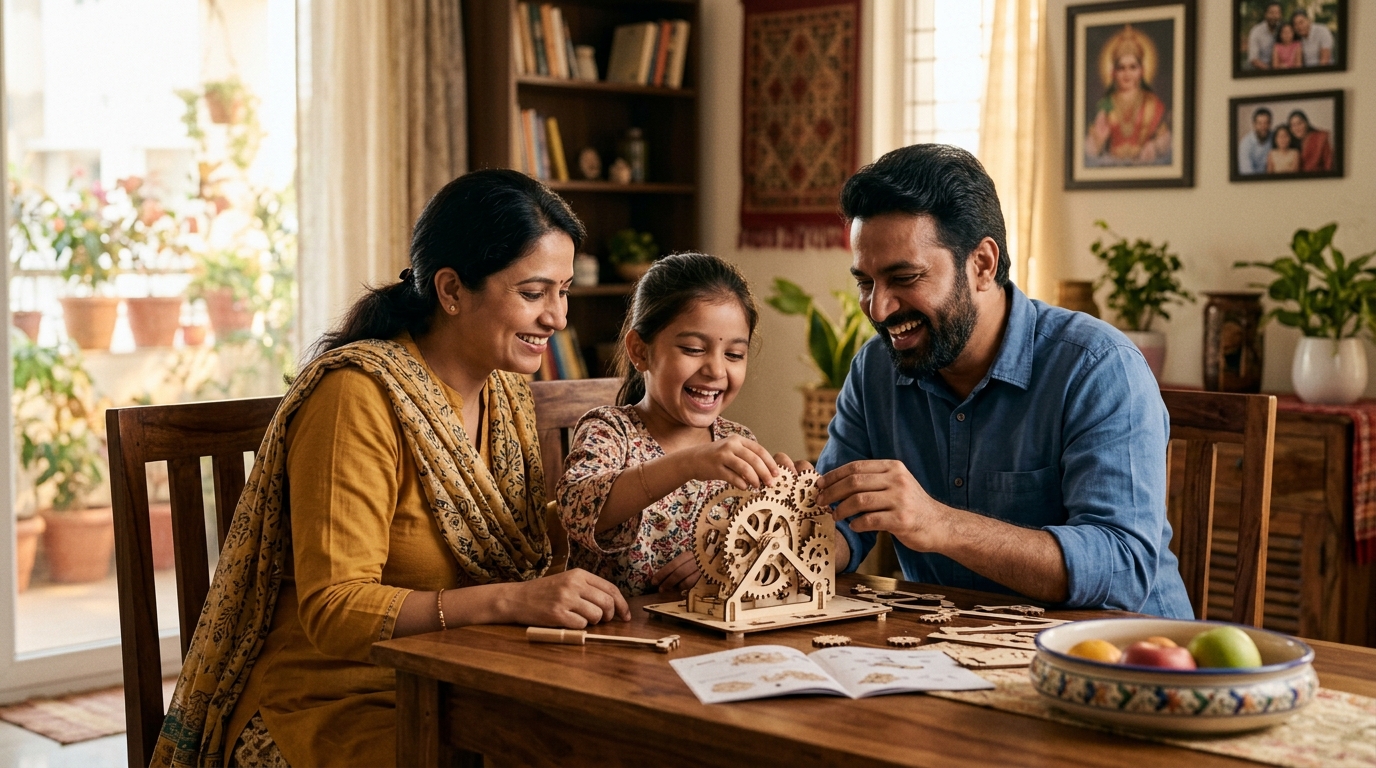
Children sense the difference between being monitored and being accompanied. Sit down alongside your child, let them be the "Chief Engineer," and take on the role of their "Apprentice Assistant" who hands them the next wooden gear or holds the support column.
4. Praise the Problem-Solving Process, Not Just Success
Avoid saying only "You're so smart!" Instead, highlight persistence: "I love how you noticed that the gear was jammed and tried three different alignments until it turned smoothly. That is how real engineers think!"
5. Replace Digital Rewards with Maker Milestones
Instead of promising video game time as a reward for exam results or good behavior, celebrate with a new STEM building project that you can construct together as a weekend family event.
6. Welcome Tactile Noise & Mess
True scientific discovery is not silent. The gentle click-clack of wooden gears, the rolling of marbles down curved chutes, and the focused murmurs of testing a mechanism are the sounds of healthy cognitive growth.
7. Display Finished Creations with Pride
Give your child’s completed architectural castles, optical projectors, and kinetic automata prime shelf space in the living room. Every visitor who asks "Did you build that yourself?" boosts your child's intrinsic self-confidence tenfold.